Understanding JWT Authentication in Node.js
Modern applications need a way to identify users securely.
Whenever users:
log in
access private data
use protected routes
the server needs to verify their identity.
This process is called:
Authentication
One of the most commonly used authentication methods today is JWT authentication.
What is Authentication?
Authentication means verifying who the user is.
Example:
user enters email and password
server checks credentials
access is granted if valid
Without authentication:
anyone could access private data
accounts would not be secure
That is why authentication is important in backend systems.
What is JWT?
JWT stands for:
JSON Web Token
A JWT is a token used for securely transferring user information between client and server.
After successful login:
server generates a token
client stores the token
future requests send the token
Instead of storing user sessions on the server, the token itself carries authentication information.
This is called:
Stateless Authentication
because the server does not store session data.
Structure of a JWT
A JWT has three parts:
header.payload.signature
Example:
eyJhbGciOi...
The three sections are separated using dots.
Header
The header contains information about:
token type
algorithm used
Example:
{
  "alg": "HS256",
  "typ": "JWT"
}
Payload
The payload contains user-related data.
Example:
{
  "id": 101,
  "name": "Ishan"
}
This data is called:
claims
Payload usually stores:
user ID
roles
permissions
Signature
The signature is used to verify that the token has not been modified.
Server generates it using:
secret key
header
payload
If someone changes token data, signature verification fails.
Login Flow Using JWT
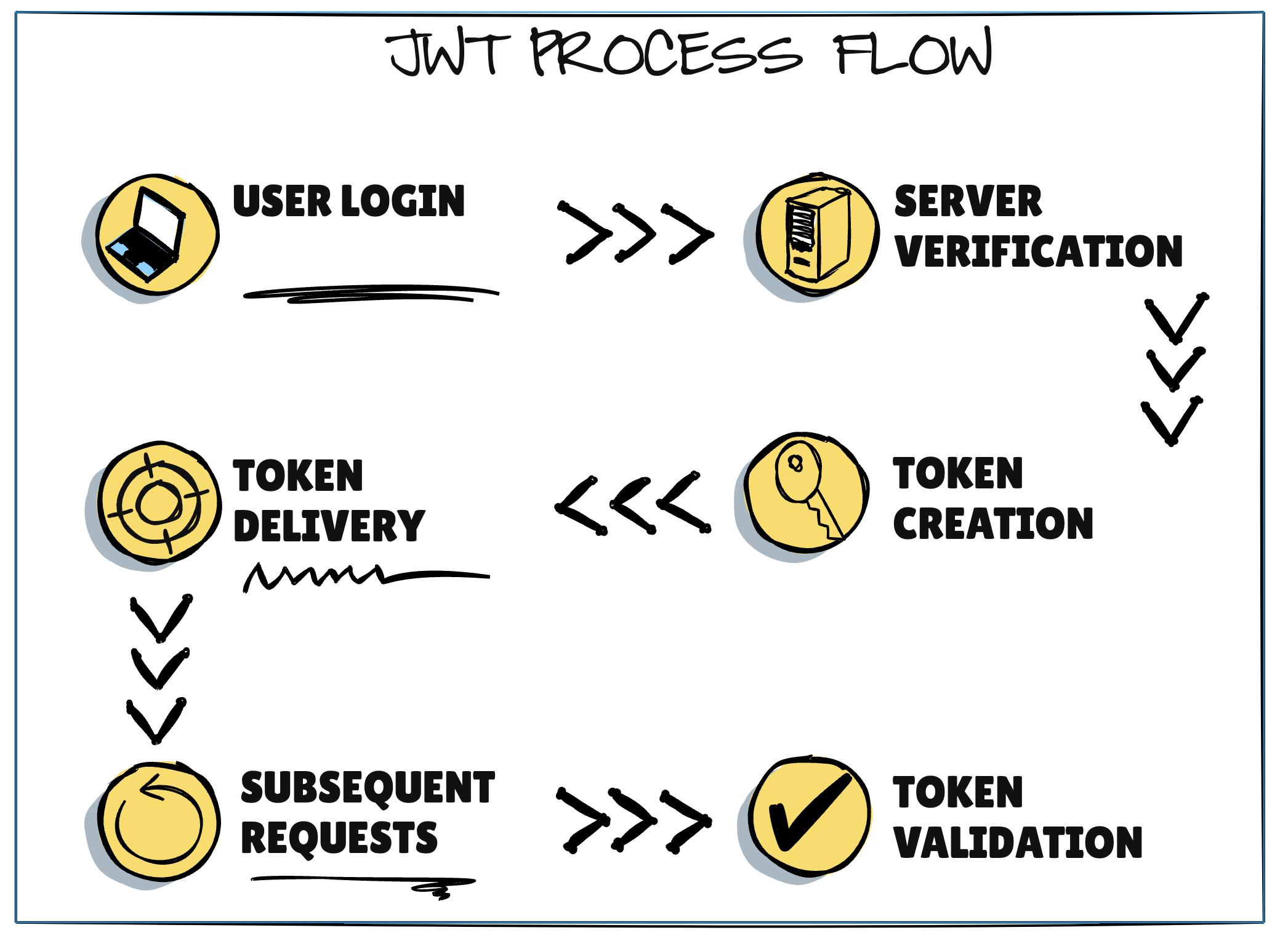
The basic flow looks like this:
User logs in
Server validates credentials
JWT token is generated
Client stores token
Future requests send token
Server validates token
This removes the need for server-side sessions.
Sending Token with Requests
JWT tokens are usually sent inside request headers.
Example:
Authorization: Bearer <token>
The server reads the token and verifies it before allowing access.
Protecting Routes Using Tokens
Some routes should only be accessible to authenticated users.
Example:
profile page
dashboard
payment routes
Middleware is commonly used to verify tokens.
Example:
function verifyToken(req, res, next) {

  const token = req.headers.authorization

  if (!token) {
    return res.send("Access Denied")
  }

  next()
}
Here:
token is checked
request proceeds only if valid
Stateless Authentication (Simple Understanding)
Traditional session authentication stores user state on the server.
JWT works differently.
Instead:
token itself carries identity information
server only verifies token
This makes JWT scalable for:
APIs
mobile apps
distributed systems
Real-World Usage of JWT
JWT is heavily used in:
REST APIs
mobile authentication
frontend-backend separated apps
microservices
Because:
no session storage required
scaling becomes easier
Token Validation Lifecycle
Important Beginner Clarification
JWT does NOT automatically make applications secure.
Security still depends on:
strong secret keys
secure storage
HTTPS usage
token expiration handling
JWT is simply a method for authentication.
How to Think About JWT
Simple mental model:
login → receive token
future requests → send token
server verifies identity using token
That is the core idea.
One Line Summary
JWT authentication uses tokens to verify user identity without storing session data on the server.
Conclusion
JWT authentication became popular because it provides a scalable and stateless way to handle user authentication.
By sending tokens with requests instead of storing sessions, applications can authenticate users efficiently across APIs and distributed systems.
Understanding JWT is important because it is widely used in modern backend development.